The secret to finding books that get kids engaged with art and art history is simple: find books that go beyond the facts of an artist’s biography to address important themes about life.
With hundreds of picture books about art available, finding the ones that have meaning for your child can feel daunting. Here are seven picture books that stick with young readers and engage their imagination.
 1.
1. Just Behave, Pablo Picasso! by Jonah Winter (Author) and Kevin Hawkes (Illustrator) is about Picasso and his art but, even more, it is about courage and standing up to mean comments. Winter turns Picasso’s life into a drama. By doing that, the story reaches into the heart of every child who is told to “just behave.” It can touch every child who needs inner strength to pursue a dream in the face of criticism. The book starts with a canvas of a peaceful landscape. Turn the page, and a young Picasso is bursting through that same canvas. When art dealers tell Picasso his new work is terrible, Picasso “expands himself to a height of one hundred feet” and shouts, “The chief enemy of creativity is ‘good sense!’” What a marvelous way to relate to the intense feelings of children. Readers feel what it means to resist the judgments of peers and forge one’s own path. Ages 4 to 8.
2. 
 Children intuitively know that perseverance in the face of adversity is the way to succeed. They don’t always know how to persevere or how to overcome the constraints of disability. In Capturing Joy: The Story of Maud Lewis written by Jo Ellen Bogart and illustrated by Mark Lang, children learn about a Canadian painter who, through force of will, created images of joy despite a hard life. Lewis was born with several birth defects, had rheumatoid arthritis, and was dirt poor. Her husband was a fish peddler and they lived in a house without electricity and indoor plumbing. Despite these challenges, she persevered, and became famous slowly, over time. Lewis’ house—which she turned into a work of art—is now a part of the Art Gallery of Nova Scotia. In addition to illustrating what self-determination means, the book introduces children to a less known female artist and to folk art. Ages 8 to 12.
 3.
3.  Imagine! by Raúl Colón is a pure picture book: there are no words. Yet it tells a beautiful story based on the author’s life. Colón became a highly acclaimed children’s book illustrator. But growing up, he had only visited one museum, the American Museum of Natural History. He learned to draw by copying what he saw in comic books and on the printed page. His first visit to an art museum — the Museum of Modern Art — was as an adult. He responded to van Gogh’s Starry Night like a child and was overwhelmed with emotions. Imagine! shows the creative adventure he might have had (and that anyone might have) if visiting an art museum as a child. In the book, a young boy skateboards by the Museum of Modern Art and decides to go in. Artwork by Picasso, Rousseau, and Matisse step off the canvas and follow him around New York City. At the end of the day, when the imagined art returns to the museum and the boy returns home, something very touching happens. I won’t spoil the ending by giving it away, but it is wonderful. Ages 4 to 8.
 4.
4.  Anna and Johanna: A Children’s Book Inspired by Jan Vermeer by Géraldine Elschner (author) and Florence Kœnig (illustrator) takes its inspiration from two of Vermeer’s paintings: The Milkmaid and The Lacemaker. The author noticed that the women in the paintings look like they could be sisters, despite the fact that one is a servant and the other upper class. This sets the stage for an imaginative mystery tale set in the Dutch city of Delft. It takes a real event – an explosion at a gunpowder magazine in 1654 – to show how two women react to a secret shared in a letter. Ages 4 to 8.
 5. This next book is about a woman who writes and illustrates picture books. The Scraps Book: Notes from a Colorful Life
 is by and about Lois Ehlert, one of the most gifted picture book makers of our time. It is incredibly colorful, has many craft lessons for readers, and shows what it is like to be an artist. It addresses where inspiration comes from. I especially liked the time when Ehlert’s sister’s cat brushed her ankles. No spoilers here, but I recommend reading the page where she shows two versions of the story that grew out of that incident. Ehlert is a recipient of the Eric Carle Museum of Picture Book Art Artist Award for lifelong innovation in the field of children’s books. What a role model for an aspiring young artist. Ages 5 to 10.
 6.
6. How do you step out and claim your own voice? It’s a question every child faces. Giving an answer makes a book relevant and engaging. Me, Frida, written by Amy Novesky and illustrated by Caldecott Medalist David Diaz, is one of many books about artistic pioneer Frida Kahlo. What I like about this book is that it focuses on Frida’s time in San Francisco. This is where she found her inspiration to step out and find fame on her own, separate from the shadow of her husband and mentor, Diego Rivera. The book shows Frida and Diego exploring the city. How familiar is this: he expresses an opinion; Frida disagrees? When the couple explore towering redwood groves Diego feels empowered; Frida falls asleep. Gradually, she explores the city on her own, focusing on the things that appeal to her. There is a great illustration where, out of the blue, Frida starts to sing Mexican songs at a party to honor Diego. That night, she painted a picture that made her famous. It was a portrait of her and Diego. As in life, he was big, and she was small. However, in the portrait, in a ribbon in the beak of a bird, she puts her name first. Unlike many other children’s books on Kahlo (which, overall, give more information about her life and art), Me, Frida recognizes the significance of this step. In the story, it occurs in a context in which its meaning makes sense. Ages 5 to 7.
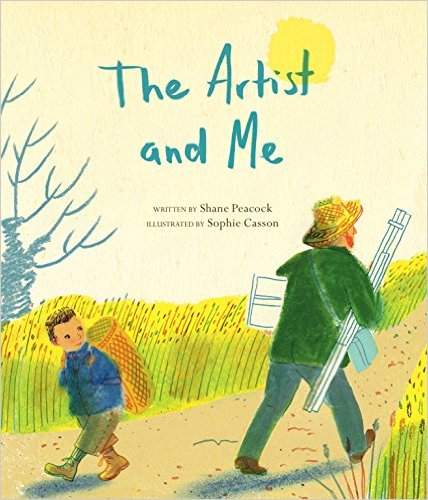
 7. Written by Shane Peacock and illustrated by Sophie Casson, The Artist and Me
 is a picture book about both bullying and Vincent van Gogh. The artist was misunderstood during his life and tormented by both inner demons and public criticism of his appearance and eccentric behavior. The contrast between van Gogh, the artistic genius, and van Gogh, the disheveled human man, became intense when he moved to the French country town of Arles. Van Gogh created some of his most beloved paintings in the few months that he lived in Arles. But he had few friends there, many of the townsfolk complained about him, and their children would tease him. The book takes an approach to the facts of van Gogh’s life that is relevant to the times we live in. The protagonist is fictional and nameless–one of the many children who teased van Gogh. The text captures the difference between a private child, who is secretly fascinated by van Gogh’s paintings (which he sees while spying on van Gogh from a hiding place), and a public bully who was mean in crowds “since that is what cowards do.” The ending is a lesson about how bullies can change and grow. It is also a lesson about the rewards of artistic integrity. The illustrations capture not just the meanness of bullying but also the yellow, green and gold hues of the French country side memorialized in van Gogh’s work. The text is lyrical and subtle. It works like the best picture books should, with the pictures telling and foreshadowing the story in partnership with the words. Ages 5 to 9.
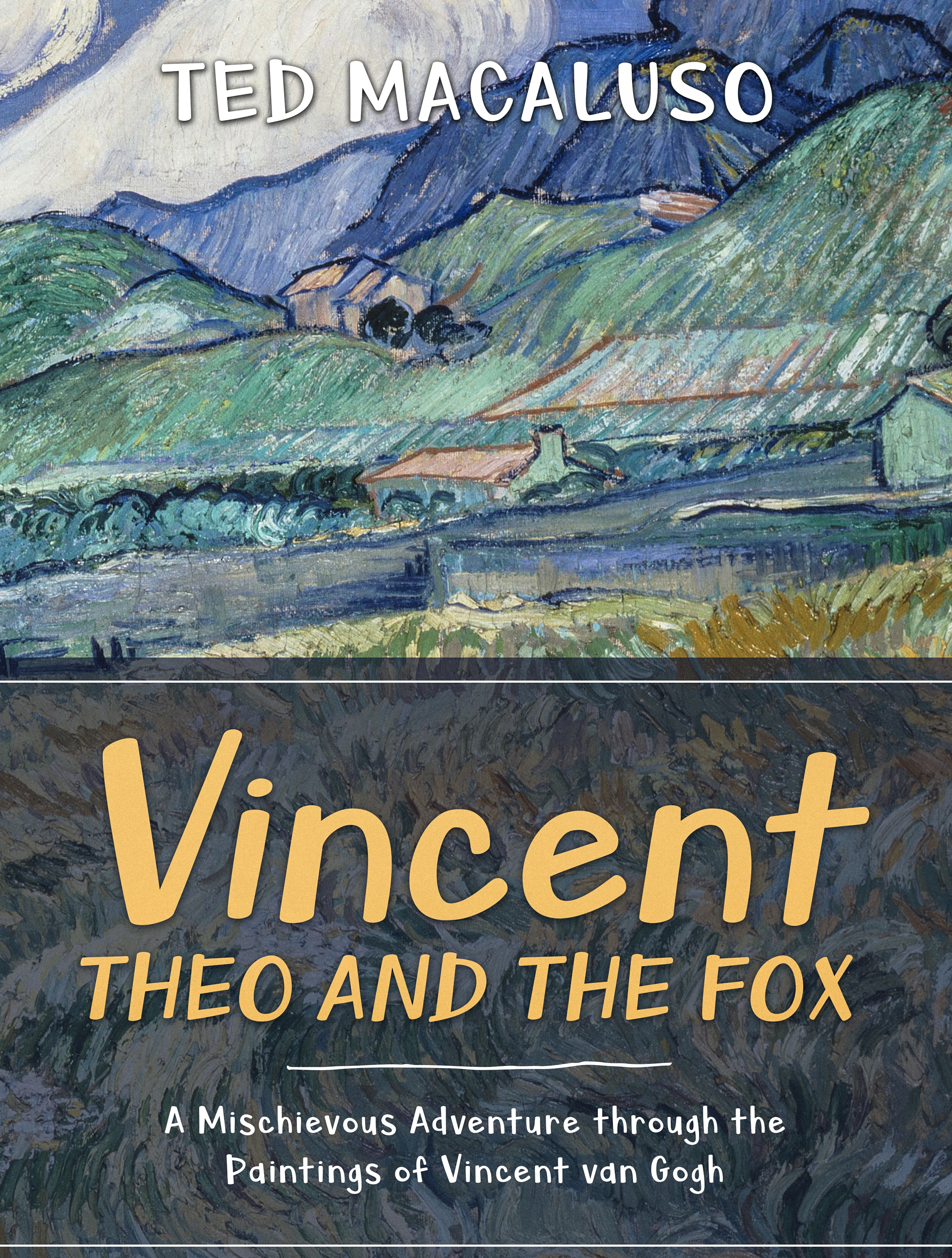 Ted Macaluso is the author of Vincent, Theo and the Fox: A mischievous adventure through the paintings of Vincent van Gogh
 , an adventure story for kids about the young Vincent van Gogh that teaches about growing up and learning from failure (ages 4 to 10). Kirkus Reviews calls it “a charming unique way to introduce youngsters to great art while providing an important message.” He lives in Reston, Virginia and blogs about children’s books and art at www.tedmacaluso.com.
Text © 2019 by Ted Macaluso.
Note: Some of the links above are “affiliate links” to Amazon.com, which means that Amazon pays me a few pennies if you end up buying the book through the link here. Your price is the same whether you use the affiliate link or find the book another way. The pennies don’t influence my judgment. These are all books I’ve read and recommend. You’re free to click, look on Amazon, and not buy.



 1.
1.


 4.
4.

 is by and about Lois Ehlert, one of the most gifted picture book makers of our time. It is incredibly colorful, has many craft lessons for readers, and shows what it is like to be an artist. It addresses where inspiration comes from. I especially liked the time when Ehlert’s sister’s cat brushed her ankles. No spoilers here, but I recommend reading the page where she shows two versions of the story that grew out of that incident. Ehlert is a recipient of the Eric Carle Museum of Picture Book Art Artist Award for lifelong innovation in the field of children’s books. What a role model for an aspiring young artist. Ages 5 to 10.
 6.
6. How do you step out and claim your own voice? It’s a question every child faces. Giving an answer makes a book relevant and engaging.
 is a picture book about both bullying and Vincent van Gogh. The artist was misunderstood during his life and tormented by both inner demons and public criticism of his appearance and eccentric behavior. The contrast between van Gogh, the artistic genius, and van Gogh, the disheveled human man, became intense when he moved to the French country town of Arles. Van Gogh created some of his most beloved paintings in the few months that he lived in Arles. But he had few friends there, many of the townsfolk complained about him, and their children would tease him. The book takes an approach to the facts of van Gogh’s life that is relevant to the times we live in. The protagonist is fictional and nameless–one of the many children who teased van Gogh. The text captures the difference between a private child, who is secretly fascinated by van Gogh’s paintings (which he sees while spying on van Gogh from a hiding place), and a public bully who was mean in crowds “since that is what cowards do.” The ending is a lesson about how bullies can change and grow. It is also a lesson about the rewards of artistic integrity. The illustrations capture not just the meanness of bullying but also the yellow, green and gold hues of the French country side memorialized in van Gogh’s work. The text is lyrical and subtle. It works like the best picture books should, with the pictures telling and foreshadowing the story in partnership with the words. Ages 5 to 9.
  , an adventure story for kids about the young Vincent van Gogh that teaches about growing up and learning from failure (ages 4 to 10). Kirkus Reviews calls it “a charming unique way to introduce youngsters to great art while providing an important message.” He lives in Reston, Virginia and blogs about children’s books and art at








 Ted Macaluso - Author